
Air Quality
- Today's Air Quality Health Index (AQHI)
- Open Air Burning and Venting Index
- Air Quality
- Air Quality Monitoring in Chilliwack
- CARIP Climate Action/Carbon Neutral Progress Reports
- Biodiversity
- Waste Incineration
- Water Conservation
Air quality is an environmental and social issue of high priority since it can have a profound effect on quality of life. The Lower Fraser Valley Airshed (LFVA), in which Chilliwack is located, is confined because air becomes trapped in the valley due to the surrounding mountains. As a result, the airshed is susceptible to the build-up of contaminants. Therefore, protective measures are required to reduce potential impacts on human health, visibility and the environment. The LFVA is shown by light green on the map below.
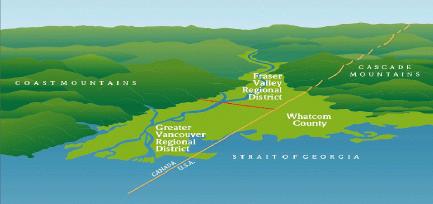
(Map source: 2000 Emission Inventory for the LFVA)
Air quality in Chilliwack is a function of both human and environmental factors. Vehicle, industrial and agricultural emissions are the greatest human factors. Weather conditions also influence Chilliwack’s air quality, as wind from the west transports pollutants up the valley.
Air Quality Monitoring in Chilliwack
Air quality and emissions in the Fraser Valley Regional District (FVRD) are regulated by the provincial government under the Environmental Management Act. For more information, please visit the FVRD Air Quality and Climate website. Air quality in Chilliwack is also monitored on an on-going basis by Metro Vancouver.
The Air Quality Health Index (AQHI), a standardized measurement designed to report air-borne pollutants health risks, can be found here. Metro Vancouver also prepares annual reports as well as a Lower Fraser Valley Air Emissions Inventory every five years.
Air Quality Health Index
Up-to-date information from Environment Canada about the Air Quality Health Index in the Fraser Valley.
Community Wood Smoke Reduction Program
The FVRD has launched a Wood Smoke Reduction Program to improve air quality in the region. Find out how you can get a $250 rebate.
Idle-Free
In order to reduce greenhouse gas emissions and smog causing pollutants, the City has launched an "anti-idling" campaign. This campaign involves both policy and public education components. In September 2004, City Council adopted a policy that will eliminate all unnecessary vehicle idling within municipal fleets.
Why Idling Is A Problem | Ready To Do Your Part? Spare Our Air
Radon Testing
Radon is a naturally occurring radioactive gas found in the ground throughout the world. This webpage provides information about radon, testing for radon and radon mitigation practices.
Waste Incineration
Discusses the Metro plan to utilize waste to energy and the City's stance on the issue.
What actions can be taken to protect our air?
Ways that residents can help improve our air quality.
Wood Burning
Important environmental, health and safety information that you should know about wood burning.